

Eiichi Naito
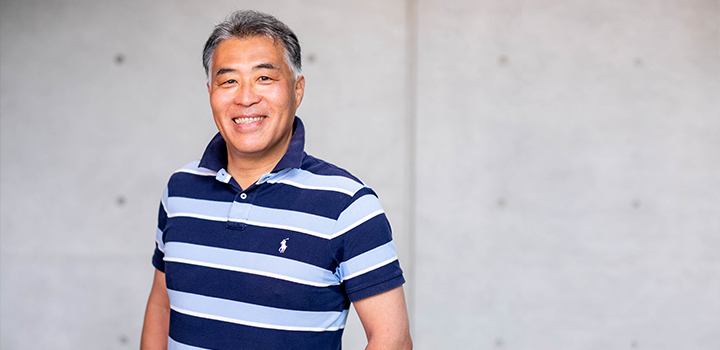
Main Lab Location:
CiNet (Main bldg.)Other Affiliations:
Invited Professor, Graduate School of Frontier Biosciences, Osaka UniversityMailing Address:
2A6 1-4 Yamadaoka, Suita City Osaka, 565-0871Email:
eiichi.naito at nict.go.jpHomepage:
https://researchmap.jp/read0045911Our laboratory primarily uses neuroimaging techniques such as MRI and behavioral approaches to research and develop technologies that allow us to gain a deep understanding of human sensory and motor functions and to improve and enhance these functions.
Our interests encompass a wide range of topics from human body perception to motor control and motor learning. For example, body image, brain representations of body awareness and self-consciousness, understanding of others, motor intention, motor imagery, motor adaptation, motor skills, and sensorimotor linkage are major research topics. In MRI research, we use brain function mapping, brain information decoding techniques, and causality analysis to understand the brain mechanisms of human sensory information processing, motor control, and motor learning from both functional and structural aspects of the brain. We are also working to understand the brain systematically through the construction of computational models based on behavioral measurements. Based on this understanding, we are developing methods to effectively improve and enhance human sensory and motor functions using methods such as robotic intervention, neural modification, and complementary sensory feedback.
Our research targets a wide range of subjects, from children to the elderly, from the visually impaired to top athletes, and visualizes functional differentiation associated with development, functional decline with aging, and brain specialization and hyper-adaptive functions observed in disabled people and sports masters to understand the plasticity at the brain network level that occurs throughout the human life span. We are trying to elucidate the rules. In particular, we are focusing on the inhibitory mechanisms that occur in the large-scale networks in the brain that allow various functions of the brain to operate in an orderly fashion, and we are also building computational models of the development and aging of these inhibitory mechanisms. Only through such multifaceted research can a comprehensive understanding of the brain be achieved. Such a comprehensive understanding of the brain will provide the academic foundation for realizing a society in which everyone, from children to the elderly and disabled, can play an active role by making the most of their own brain’s potential adaptability.
We further aim to establish a research framework in which the findings of the above basic research can be seamlessly transferred to real-life settings such as sports and rehabilitation training. To achieve this, we conduct research together with graduate students at Osaka University and are actively engaged in joint research with various universities and companies, including Osaka University.
Selected Publications:
Miura G, Morita T, Park J, Naito E Younger adult brain utilizes interhemispheric strategy of recruiting ipsilateral dorsal premotor cortex for dexterous finger movement, unlike the aging brain. Frontiers in Aging Neuroscience 17 https://doi.org/10.3389/fnagi.2025.1501011, 2025.
Morita T, Naito E Gray matter volume increase in the retrosplenial/ posterior cingulate cortices of blind soccer players. Frontiers in Neuroscience 19 https://doi.org/10.3389/fnins.2025.1462481, 2025.
Yukawa Y, Higashi T, Minakuchi M, Naito E, Murata T Vibration-induced illusory movement task can induce functional recovery in patients with subacute stroke. Cureus, 16(8):e66667. doi: 10.7759/cureus.66667, 2024.
Furuta T, Morita T, Miura G, Naito E Structural and functional features characterizing the brains of individuals with higher controllability of motor imagery. Scientific Reports, 14, Article number: 17243, 2024.
Nakano H, Tang Y, Morita T, Naito E Theoretical proposal for restoration of hand motor function based on plasticity of motor-cortical interhemispheric interaction and its developmental rule. Frontiers in Neurology 15, 1408324; https://doi.org/10.3389/fneur.2024.1408324, 2024.
Morita T, Takemura H, Naito E Functional and structural properties of interhemispheric interaction between bilateral precentral hand motor regions in a top wheelchair racing Paralympian. Brain Sciences 13(5), 715; https://doi.org/10.3390/brainsci13050715, 2023.
Morita T, Naito E Facilitation of hand proprioceptive processing in paraplegic individuals with long-term wheelchair sports training. Brain Sciences 12(10), 1295; https://doi.org/10.3390/brainsci12101295, 2022.
Morita T, Hirose S, Kimura N, Takemura H, Asada M, Naito E Hyper- adaptation in the human brain: Functional and structural changes in the foot section of the primary motor cortex in a top wheelchair racing Paralympian. Frontiers in Systems Neuroscience, https://doi.org/10.3389/fnsys.2022.780652, 2022.
Naito E, Morita T, Hirose S, Kimura N, Okamoto H, Kamimukai C, Asada M Bimanual digit training improves right hand dexterity in older adults by reactivating declined ipsilateral motor-cortical inhibition. Scientific Reports 11, Article number: 22696, 2021.
Announcements / News:
Grant-in-Aid for Challenging Research (Pioneering):
FY 2023-2026 Development of MRI-compatible hand haptic robot that opens the way for futuristic training methods.
Grant-in-Aid for Scientific Research (A):
FY 2026-2030 Developing next-generation rehabilitation methods through elucidation of neural processes for proprioceptive-motor coupling
Lab Members:
Researcher
・Tsuyoshi Ikegami
・Jihoon Park
・Ozge Ozlem Saracbasi
・Yuki Suda
・Akiko Callan
Student
・Tang Yandi
・Yuki Saito
Assistant
・Noriko Karasudani
・Mayura Fujita
・Mayumi Irikawa
・Keiko Ueyama
Collaborative Researcher
・Hideki Nakano (Kyoto Tachibana University)
・Satoshi Hirose (Otemon Gakuin University)
・Nobuaki Mizuguchi (Juntendo University)
・Hiroshi Yokoyama (Shiga University)
・Gurgone Sergio
・Ryosuke Murai
Invited Specialist
・Yasuharu Koike (Science Tokyo)
Staff
・Koji Takashima